
Trump Accounts vs. 529 Plans: Which Is Right for Your Child or Grandchild?

Ever since the new Trump Accounts became available on July 4, 2026, most of the headlines have focused on the government's $1,000 contribution for qualifying children born between 2025 and 2028. While that's certainly exciting, it's only one part of the story.
The bigger question is this:
Is a Trump Account actually the right place to save for your child or grandchild?
As with most financial planning questions, the answer depends on what you're trying to accomplish.
What is a Trump Account?
A Trump Account is a new type of tax-advantaged savings account designed to help children begin building retirement savings long before they're old enough to earn a paycheck. One of its most unique features is that the child does not need earned income to receive contributions.
That's a significant departure from traditional custodial IRAs (whether Roth or Traditional), which generally require the child to have earned income before contributions can be made.
Parents can establish a Trump Account for a child up until the year before the child turns 18, giving families many years to contribute and take advantage of long-term compounding. Trump accounts can be opened via IRS Form 4547 (to be filed with your annual tax return) or through www.TrumpAccounts.gov.
Who Can Contribute?
For 2026, up to $5,000 per year can be contributed to a child's account from all contributors combined.
Contributors may include:
Parents
Grandparents
Legal guardians
Aunts and uncles
Family friends
Other individuals
For families looking for another way to transfer wealth to the next generation, this can be an attractive planning tool.
*A note for grandparents (and generous relatives): If you're thinking about contributing, I recommend coordinating with the child's parents first. Since the annual contribution limit applies to the account as a whole—not to each contributor individually—a quick conversation can help everyone avoid exceeding the annual limit.
Remember: This Eventually Becomes an IRA
This is one of the biggest details many articles leave out.
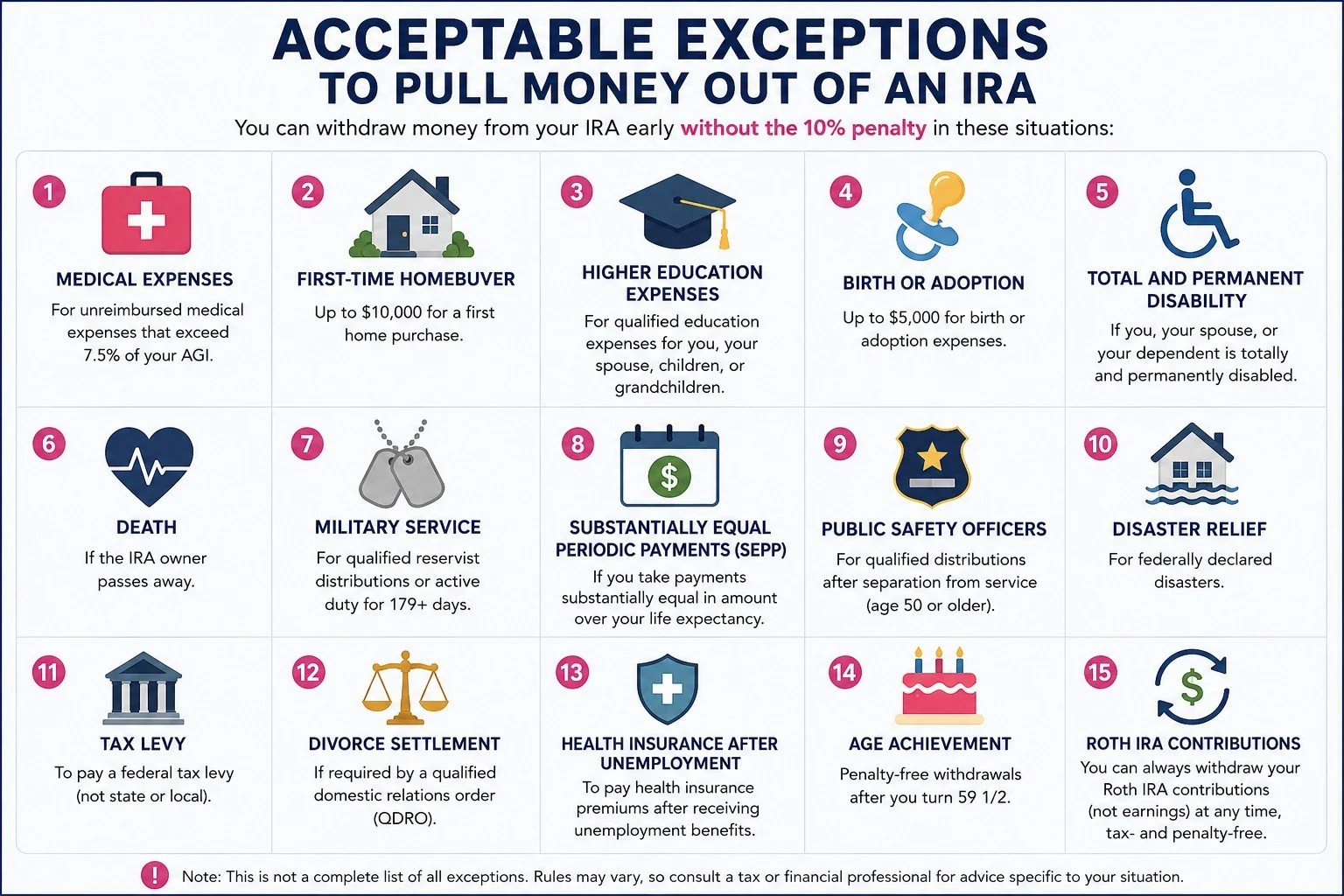
When the child turns 18, the Trump Account transitions into an IRA. That means the money isn't designed to pay for just anything. Future withdrawals are generally subject to the same IRA rules as other retirement accounts. Unless an IRS exception applies, taking money out before age 59½ may result in income taxes and a 10% early withdrawal penalty.
Trump Account or 529 Plan?
If your goal is paying for college... A 529 Plan is still my first choice.
Qualified education withdrawals are tax-free, and 529 plans remain one of the most effective ways to save for education expenses.
In fact, I have two favorite 529 plans that I regularly recommend to clients. (Ask me to find out what they are!)
If your goal is building retirement wealth...
A Trump Account may be worth considering.
Because contributions can begin years before a child has earned income, families have an opportunity to start investing for retirement incredibly early. Even modest annual contributions can potentially grow substantially over several decades.
For some families, it won't be an either-or decision.
A 529 can help fund education while a Trump Account helps build long-term retirement security.
Each serves a different purpose.
One Area Where I'd Encourage Caution
I've already seen articles recommending that once a Trump Account becomes an IRA at age 18, the young adult should immediately convert it to a Roth IRA.
I would encourage families to slow down before making that decision.
Because the account becomes a traditional IRA, a Roth conversion could create taxable income. Depending on the child's age, dependency status, student status, and support, the kiddie tax may apply.
The kiddie tax is designed to prevent families from shifting investment income to children in lower tax brackets. For 2026, the first $1,350 of a dependent child's unearned income is generally sheltered by the child's standard deduction, the next $1,350 is generally taxed at the child's own rate, and unearned income above $2,700 may be taxed using the parents' marginal tax rate if the child meets the kiddie tax rules.
For many families, it may make sense to wait until the child is no longer subject to the kiddie tax before considering a Roth conversion. For many children, that's after age 18 if they're self-supporting, or after age 23 if they're a full-time student. Exactly when that occurs depends on the child's circumstances, and because Trump Accounts are brand new, I expect we'll receive additional IRS guidance over time.
The Bottom Line
If your primary goal is education, a 529 is still difficult to beat. If your goal is giving a child a decades-long head start on retirement, a Trump Account may deserve a place in your family's plan. As always, the best account isn't the newest account. It's the account that best supports your family's goals.
If you're wondering whether a Trump Account, a 529, or another strategy makes the most sense for your family, I'd be happy to help you think it through. Feel free to schedule a quick conversation or reach out anytime.
Here's to building wealth one thoughtful decision at a time.